

Product Development Lifecycle: From Concept to Market
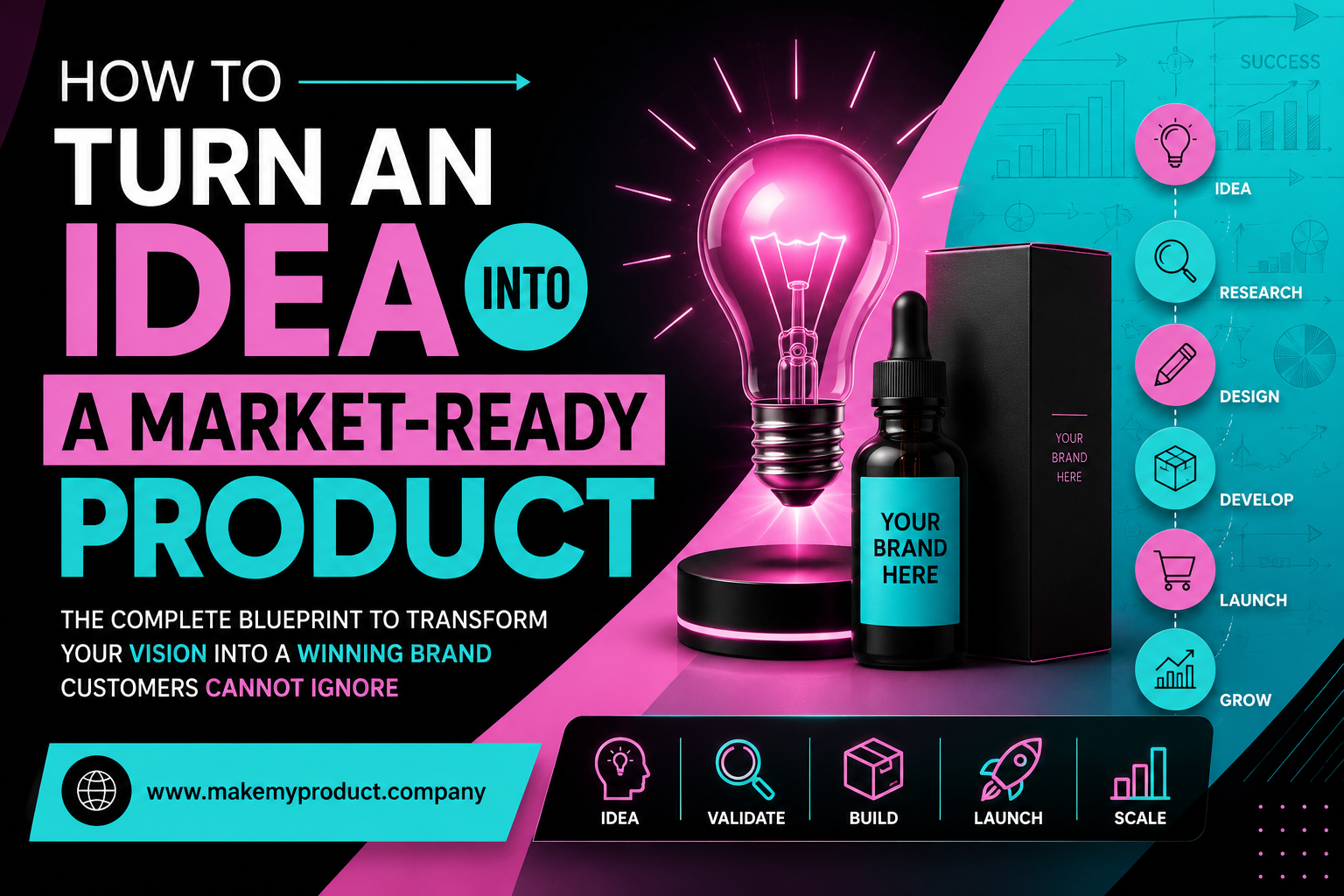
In today’s hyper-competitive business environment, success is no longer determined by having a great idea alone. The real challenge lies in transforming that idea into a scalable, profitable, and market-ready product. The product development lifecycle is the structured journey that takes a raw concept and shapes it into something customers can see, touch, trust, and buy.
Yet, despite its importance, most businesses underestimate this process. They rush, skip critical stages, or fail to validate their ideas properly. The result is predictable: wasted investment, failed launches, and missed opportunities that competitors quickly capture.
Understanding the product development lifecycle is not just a business advantage; it is a survival requirement in modern markets.
1. Idea Generation: Where Every Successful Product Begins
Every powerful product starts with a problem that needs solving. Idea generation is the stage where creativity meets observation. Businesses analyze market gaps, customer pain points, emerging trends, and technological opportunities.
However, the most critical mistake at this stage is assuming that every idea is a good idea. In reality, only ideas that solve real, measurable problems have long-term potential.
Strong ideas usually come from:
- Customer complaints and feedback patterns
- Market inefficiencies
- Industry disruptions
- Technological advancements
At this stage, speed matters, but direction matters more.
2. Idea Screening: The Silent Filter of Failure
This is where most weak products quietly disappear. Idea screening is the evaluation stage where businesses assess feasibility, profitability, technical constraints, and market relevance.
Many companies fail here because they fall in love with ideas instead of analyzing them objectively.
A strong screening process answers:
- Is there real demand for this product
- Can it be developed with available resources
- Will it generate sustainable revenue
- Does it align with business strategy
Ignoring this stage often leads to expensive failures later in development.
3. Concept Development and Testing: Turning Ideas Into Reality
Once an idea passes screening, it must be transformed into a clear concept. This includes defining product features, target audience, use cases, and value proposition.
Concept testing is where businesses expose the idea to real users before full-scale development.
This stage is critical because:
- It reduces market uncertainty
- It validates customer interest
- It improves product-market fit
Many successful global products evolved significantly during this phase after user feedback revealed better directions.
4. Business Analysis: The Profit Reality Check
Even a great idea can fail if it is not financially viable. Business analysis evaluates cost structure, pricing strategy, break-even point, and revenue potential.
This is where emotional decision-making must be replaced with data-driven thinking.
Key components include:
- Market size estimation
- Cost of production and distribution
- Expected profit margins
- Long-term scalability
Businesses that skip this step often realize too late that their “great product” is not financially sustainable.
5. Product Design and Development: Building the Solution
This is the stage where ideas become tangible. Engineers, designers, and developers work together to create prototypes or minimum viable products (MVPs).
The focus is on functionality, usability, and reliability rather than perfection.
Important principles include:
- Build fast, refine later
- Prioritize core features over unnecessary complexity
- Ensure user experience is intuitive and seamless
The goal is not to launch a perfect product, but to launch a working one that can evolve.
6. Testing and Validation: The Market Reality Checkpoint
Before a product reaches the public, it must be rigorously tested. This includes technical testing, usability testing, and pilot market launches.
This stage exposes hidden flaws that were not visible during development.
Key testing areas include:
- Performance under real conditions
- Customer usability experience
- Safety and compliance standards
- Market response during soft launch
Products that fail here are either improved or restructured before public release.
7. Commercialization: Entering the Market
This is the moment of truth. The product is launched, marketed, and distributed to customers.
However, successful commercialization is not just about launching; it is about strategic timing, positioning, and communication.
Critical elements include:
- Marketing campaigns
- Distribution channels
- Pricing strategy
- Brand positioning
A strong launch can determine whether a product becomes a market leader or gets ignored.
8. Post-Launch Evaluation: Continuous Evolution
The lifecycle does not end at launch. In fact, this is where the most important insights emerge.
Businesses must track:
- Customer satisfaction
- Product performance
- Market feedback
- Competitive response
Continuous improvement ensures long-term success and relevance in changing markets.
Why Most Products Fail Despite Good Ideas
The harsh truth is that most product failures are not caused by bad ideas but by poor execution of the development lifecycle.
Common reasons include:
- Skipping validation stages
- Ignoring customer feedback
- Poor market timing
- Weak business analysis
- Overcomplicating product design
Success belongs to those who respect the process, not those who rush it.
Final Insight: From Idea to Impact
The product development lifecycle is not just a framework; it is a discipline. It transforms uncertainty into structure, ideas into products, and products into businesses.
Companies that master this lifecycle don’t just launch products—they build market dominance.
In a world where competition is relentless and customer expectations evolve rapidly, the real question is not whether you have a good idea, but whether you can successfully bring it to life.