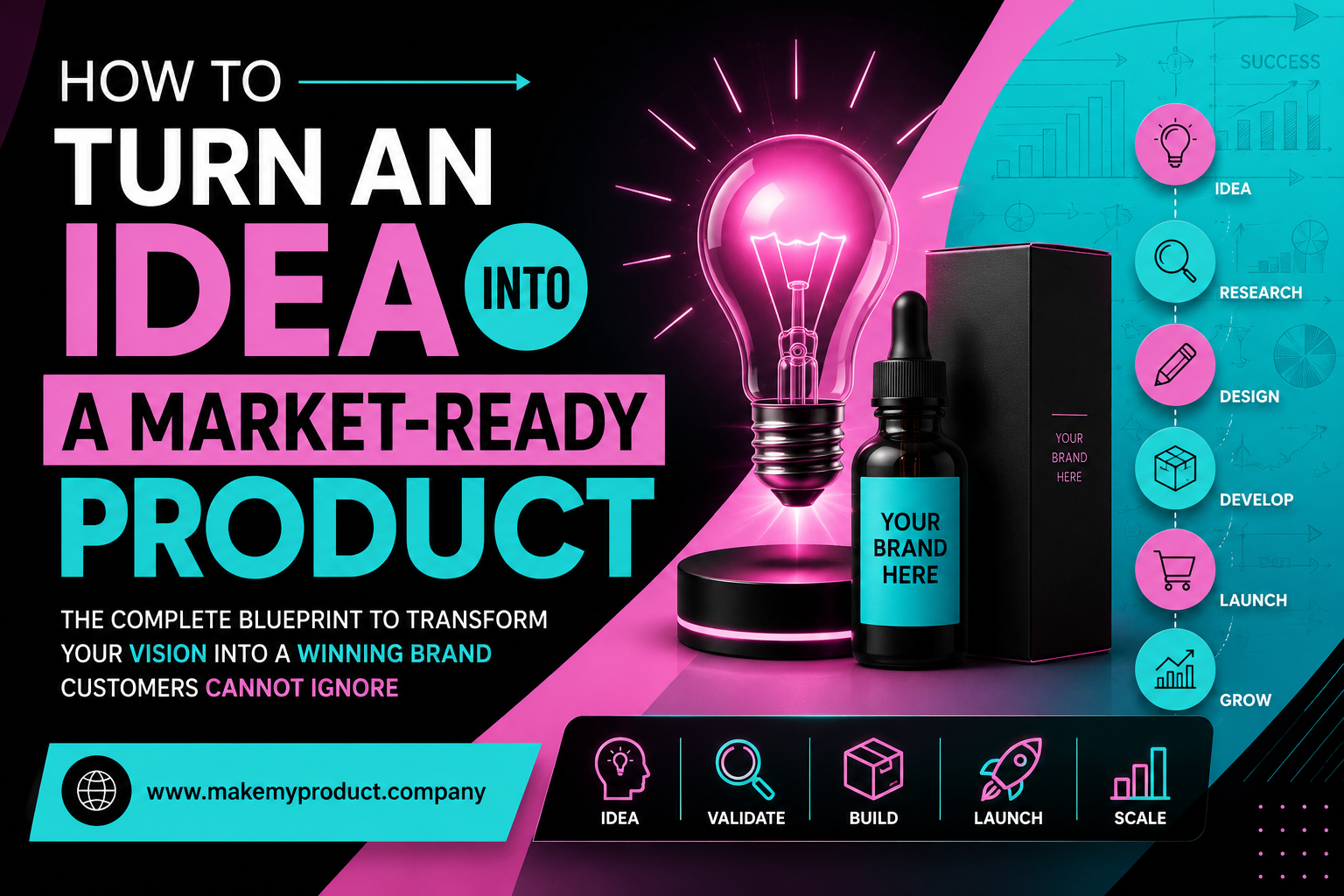


Every revolutionary product in the world started with a simple thought: “What if there was a better way?”
A problem noticed. A frustration experienced. A dream imagined.
But between having an idea and building a successful product lies a challenging journey that separates dreamers from entrepreneurs. Many people have brilliant ideas, but only those who understand the process of validation, development, branding, and market positioning are able to transform those ideas into products customers are willing to pay for.
An idea alone does not create success. Execution does.
The marketplace is filled with products that failed not because they were bad, but because they were launched without understanding customers, solving a real problem, or creating a strong connection with the audience. A market-ready product is not simply something that exists; it is something designed with purpose, tested with people, improved through feedback, and positioned to win.
The question every entrepreneur should ask is not only, “Can I build this product?” but also, “Will people need it, trust it, and choose it over everything else?”
That mindset shift is where successful products begin.
Start With The Problem, Not Just The Idea
The biggest mistake many entrepreneurs make is falling in love with their idea before understanding the problem behind it.
A powerful product does not start with what you want to create. It starts with what people genuinely need.
Before investing time, money, and resources, identify the problem your product solves. Is it saving customers time? Reducing costs? Improving convenience? Creating a better experience? Solving a pain point that existing solutions fail to address?
The strongest businesses are built around solving meaningful problems.
Companies that changed industries did not simply create products; they created solutions. They understood customer frustrations and designed something that made life easier, faster, healthier, or more enjoyable.
Research your target audience. Understand their challenges, habits, preferences, and expectations. Talk to potential customers. Study competitors. Look for gaps in the market.
The goal is not just to create something new. The goal is to create something valuable.
Validate Your Product Idea Before Building Everything
A common reason startups fail is building a product nobody wants.
Entrepreneurs often spend months or years developing products without confirming whether customers are interested. Validation helps reduce risk and provides valuable insights before major investment.
Start by testing your idea with your potential customers.
Create surveys, interviews, prototypes, landing pages, or minimum viable products. Collect feedback and observe how people respond.
A successful validation process answers important questions:
Do customers understand the value of the product?
Would they pay for it?
Does it solve a real problem?
What improvements do they suggest?
Who are the ideal customers?
Customer feedback is not criticism; it is a roadmap.
The best entrepreneurs listen before they build.
Transform Your Concept Into a Clear Product Strategy
Once your idea has been validated, the next step is turning the concept into a structured product strategy.
A strong product strategy defines:
What the product is.
Who it is for.
Why customers should choose it.
How it is different from competitors.
What experience customers should have.
Your product needs a clear identity. A confused product creates confused customers.
Think beyond features. Customers do not buy features; they buy outcomes.
A customer does not buy a fitness application because it has tracking technology. They buy it because they want better health and progress.
A customer does not buy premium furniture only because of materials. They buy comfort, style, durability, and the feeling of having a beautiful space.
A successful product connects features with emotions.
Build a Prototype and Improve Through Testing
The first version of your product does not need to be perfect.
It needs to be useful.
Creating a prototype allows you to visualize your idea, identify weaknesses, and gather real-world feedback before the final launch.
A prototype can be a simple design, sample product, digital model, or early version that demonstrates your concept.
Testing helps answer critical questions:
What do customers like?
What creates confusion?
What needs improvement?
What makes customers excited?
Successful products are rarely created in one attempt. They evolve through continuous improvement.
Every customer interaction provides information that helps make the product stronger.
Focus on Quality, Design, and Customer Experience
In today’s competitive market, quality is no longer optional.
Customers have endless choices. A product must create confidence from the first impression.
Quality includes:
Reliable performance.
Professional design.
Easy usability.
Strong packaging.
Clear communication.
Excellent customer support.
A product is not only what customers receive in their hands. It is the complete experience from discovery to purchase to long-term usage.
Brands that create memorable experiences build loyal customers.
People remember how a product makes them feel.
Create a Powerful Brand Around Your Product
A product can be copied. A strong brand cannot.
Branding transforms a simple product into something customers recognize, trust, and connect with.
Your brand should communicate:
Your mission.
Your values.
Your unique story.
Your promise to customers.
The strongest brands are built on emotional connections. They do not only sell products; they sell confidence, transformation, identity, and belonging.
Your name, logo, packaging, website, messaging, and marketing should create a consistent experience.
A strong brand answers one important question:
Why should customers choose you?
Understand Your Market Before Launching
A great product can fail when launched to the wrong audience.
Market understanding is one of the most important steps in building a successful product.
Define your ideal customer:
Who needs this product?
What problems do they face?
Where do they search for solutions?
What influences their buying decisions?
What motivates them?
Understanding your audience allows you to create better marketing campaigns and stronger customer relationships.
The right product in front of the right audience creates growth.
Build a Launch Strategy That Creates Demand
A successful launch does not happen by simply announcing that your product exists.
Great launches create curiosity, excitement, and urgency.
Before launching, build awareness.
Share your journey. Educate your audience. Show behind-the-scenes development. Create conversations around the problem your product solves.
People love stories.
They want to know why the product was created, who created it, and how it can improve their lives.
A strong launch strategy combines:
Content marketing.
Social media storytelling.
Influencer partnerships.
Email campaigns.
Customer testimonials.
Public relations.
Community building.
The goal is not only to sell on launch day. The goal is to create a movement around your product.
Use Customer Feedback to Scale and Improve
Launching your product is not the end of the journey. It is the beginning.
The most successful companies continuously improve based on customer insights.
Monitor reviews. Study buying patterns. Analyze customer behavior. Identify opportunities for innovation.
Markets change. Customer expectations evolve.
A product that stops improving eventually loses relevance.
Growth comes from listening, adapting, and staying connected with customers.
The Future Belongs to Entrepreneurs Who Execute Their Ideas
The world does not reward ideas that remain hidden.
It rewards people who take action.
A simple idea can become a global product when combined with research, strategy, persistence, and execution.
The journey from idea to market-ready product is not always easy. There will be challenges, failures, unexpected changes, and lessons along the way.
But every successful entrepreneur started somewhere.
The difference between an idea that disappears and a product that changes lives is the courage to begin and the discipline to improve.
Your idea may be the solution someone is waiting for.
The next big product is not created by waiting for the perfect moment.
It is created by taking the first step.