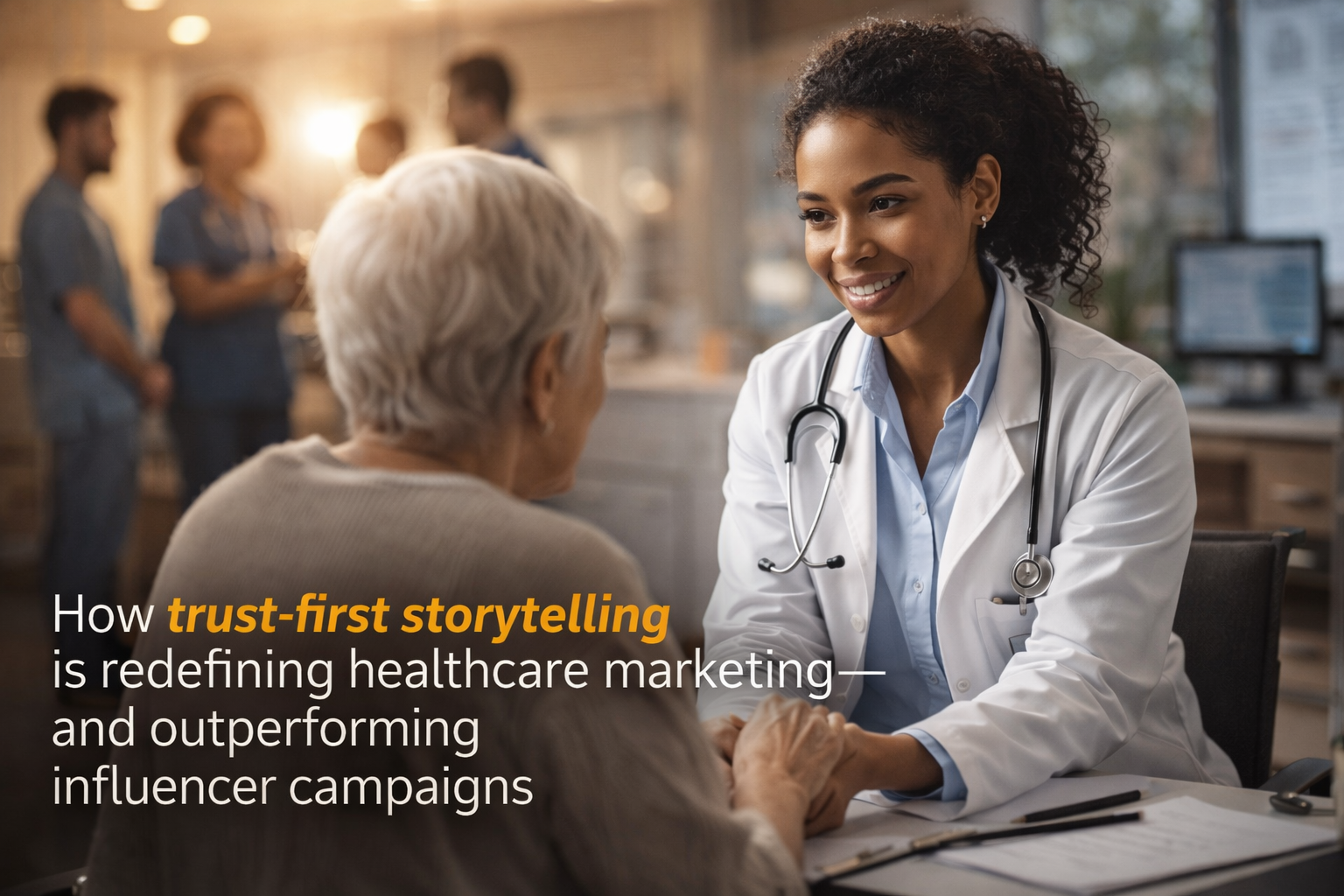


In a world flooded with paid promotions, polished influencer posts, and algorithm-driven visibility, something quietly powerful is reshaping healthcare marketing: trust-first storytelling.
Healthcare is not fashion. It is not entertainment. It is not a space where trends should dictate decisions. It is a space where lives, emotions, and human vulnerability intersect. And in this deeply sensitive ecosystem, trust is not optional—it is everything.
Yet many brands still chase influencer numbers, vanity metrics, and short-term visibility. The result? High impressions, low belief. Wide reach, weak connection.
This is where trust-first storytelling changes the game—and wins.
The problem with influencer-driven healthcare marketing
For years, influencer marketing has dominated digital strategy. Brands partner with individuals who have large audiences, expecting instant exposure. And yes, exposure happens.
But in healthcare, exposure without credibility can be dangerous.
Why influencer marketing often fails in healthcare:
- Lack of authenticity: Audiences know when content is paid. When it comes to health, skepticism increases.
- Surface-level messaging: Influencers rarely go deep into medical accuracy or emotional truth.
- Trust gap: Patients do not make health decisions based on popularity—they rely on credibility.
- Short-term spikes: Influencer campaigns may boost traffic temporarily, but they rarely build lasting trust.
Healthcare decisions are not impulse purchases. They are built on reassurance, knowledge, and emotional safety.
And influencers alone cannot provide that.
What is trust-first storytelling?
Trust-first storytelling is not about selling. It is about connecting, educating, and building belief before asking for action.
It is a strategy rooted in empathy, transparency, and real human experiences.
Instead of saying:
“Buy this product”
It says:
“Here is a story that helps you understand, relate, and feel confident.”
Why trust-first storytelling outperforms influencers
1. It builds emotional authority, not just visibility
People forget ads.
People remember stories.
When a healthcare brand shares real patient journeys, behind-the-scenes processes, or honest struggles, it creates something powerful:
Emotional authority.
This is deeper than brand awareness. It is about becoming a trusted voice.
2. It aligns with how patients search today
Modern search is no longer just keywords—it is intent.
Patients ask questions like:
- “Is this treatment safe?”
- “What should I expect after surgery?”
- “Can I trust this provider?”
Trust-first storytelling answers these questions naturally.
This makes it perfect for:
Stories become answers. And answers become rankings.
3. It creates long-term brand equity
Influencer campaigns fade.
Stories compound.
A single powerful story can:
- Be repurposed into blogs, videos, social media, and ads
- Continue ranking on search engines for years
- Build trust with new audiences over time
This is not marketing. This is asset creation.
4. It humanizes complex healthcare topics
Medical language can feel cold and overwhelming.
But storytelling translates complexity into clarity.
Instead of clinical explanations, stories show:
- Real experiences
- Real fears
- Real outcomes
And when people understand, they trust.
5. It drives action through confidence, not pressure
Influencer marketing often pushes urgency.
Storytelling builds confidence.
And confidence leads to:
- Higher conversion rates
- Better patient engagement
- Stronger loyalty
Because when people trust you, they choose you—without being pushed.
Real-world shift: from promotion to proof
The most successful healthcare brands are no longer asking:
“How do we get more views?”
They are asking:
“How do we earn more trust?”
And they are doing it through:
- Patient success stories
- Educational blog content
- Transparent case studies
- Doctor insights and narratives
- Community-driven experiences
This is proof over promotion. And proof wins.
How to implement trust-first storytelling in your healthcare brand
Step 1: Start with real stories
Collect authentic experiences:
- Patient journeys
- Before-and-after transformations
- Challenges and recoveries
Do not script perfection. Share reality.
Step 2: Focus on education, not selling
Create content that answers:
- Common patient questions
- Treatment processes
- Safety concerns
When you educate, you eliminate fear.
Step 3: Optimize for search intent
Structure your content with:
- Clear headings
- Question-based sections
- Conversational language
Think like your audience searches, not how brands advertise.
Step 4: Be transparent
Trust grows when brands are honest about:
- Risks
- Limitations
- Outcomes
Transparency is not weakness—it is strength.
Step 5: Stay consistent
Trust is not built overnight.
It requires:
- Regular storytelling
- Continuous value
- Long-term commitment
Consistency turns content into credibility.
The urgency: why you must shift now
Healthcare marketing is at a turning point.
Patients are:
- More informed
- More skeptical
- More selective
They no longer trust ads blindly.
They no longer follow hype.
They choose brands that feel real.
If your strategy still depends heavily on influencers without building trust, you are at risk of becoming invisible in a world that values authenticity.
The brands that win tomorrow are the ones building trust today.
Final thought
Trust-first storytelling is not just a strategy. It is a responsibility.
In healthcare, you are not just marketing a product or service.
You are influencing decisions that affect lives.
And that requires more than reach.
It requires integrity.
When you lead with trust, storytelling becomes your strongest asset—and your most powerful advantage.